
"extraction basics"
4000 article(s) found

Basic knowledge of coffee what kind of water should be used to make coffee
Just as water is important for making tea, it is also essential for extracting coffee. There are many kinds of water, which can be divided into: natural water, including spring water, river water, well water, lake water and Rain Water, which are generally not suitable for coffee extraction. Artificially treated water includes tap water, distilled water, purified water, ultra-pure water, softened water, etc., in which we make handmade utensils, such as siphon
Basic knowledge about coffee in boutique coffee science
Coffee won't melt when it's thrown into the water. The maximum extraction rate of roasted coffee beans is 30% (substances that can be dissolved in water divided by the total weight of coffee). 1. Whether it's French pressure, Philharmonic pressure, all kinds of pressure, or espresso. The range of the best extraction rate is 18% Mui 21%. Insufficient extraction (less than 18%) indicates that the flavor of coffee is not fully dissolved in water and is overextracted (more than 21%).

Coffee species concentration ranking coffee gold cup standard and calculation method of basic principle formula of coffee
Professional coffee knowledge exchange more coffee bean information Please follow the coffee workshop (Wechat official account cafe_style) as we have always advocated, in order to make good coffee, there are indeed many factors that need to be controlled. But what we should really know is how to make good coffee, not a bunch of expensive equipment. In other words, expensive equipment is different from ordinary inexpensive equipment.

The practice of latte basic knowledge of fancy coffee
Latte features: 1, syrup, milk, milk foam, coffee unique combination; milk with its unique delicate and mild blend of espresso strong taste; 2, the cup tilted left and right, shaking, the middle coffee will also shake, as if dancing, mysterious hazy beauty. The use of latte utensils and materials the right amount of deep-roasted coffee beans (if made according to the standard of a mug
Basic knowledge of boutique coffee what kind of water should be used to make coffee
Just as water is important for making tea, it is also essential for extracting coffee. There are many kinds of water, which can be divided into: natural water, including spring water, river water, well water, lake water and Rain Water, which are generally not suitable for coffee extraction. Artificially treated water includes tap water, distilled water, purified water, ultra-pure water, softened water, etc., in which we make handmade utensils, such as siphon

Hand brewed coffee water powder proportion step diagram-hand brewed coffee tutorial
Hand made coffee powder proportion steps diagram-hand made coffee tutorial water temperature: boiling water into the cold hand-made pot is basically about 95 degrees, this time to grind beans (I use electric mill, hand or first grind good or water into cold white) As DIMLAU said, 95 degrees start steaming, when the pot of water 90 degrees or so can start to flush, basically the water temperature has been in the right shape

What are the standard courses of the European Fine Coffee Association? Does China have scae International Coffee Certificate?
Professional coffee knowledge exchange more coffee bean information please follow the coffee workshop (Wechat official account cafe_style) European Fine Coffee Association license course: ● extraction and Grinding Certification (Gold Cup) Primary (5point) ● extraction and Grinding Certification (Gold Cup) Intermediate (10point) ● * basic Coffee knowledge course (10point) syllabus: 1. The life history of the seed

Basic knowledge of making hand-brewed coffee
There are many ways to extract coffee. What you can often hear is the siphon method of the siphon pot, the drip filtration method of the American coffee machine, and the mocha pot of high pressure extraction. In fact, coffee was brewed when it was just discovered, and then there are drip filtration, siphon and other methods. Today, the editor is going to teach you the simplest and most ramming hand coffee.

The basics of filter paper hand-brewing the basics of hand-brewing pot for making coffee
The process of brewing is not only a kind of fun, but also a process of continuous learning and understanding and more advanced craftsmanship. With the continuous injection of hot water, the scattered aroma comes, watch the expansion of coffee powder, and enjoy your coffee time in brewing. The essence of the basic knowledge of filter paper hand brewing is to use the interaction between water and coffee powder to extract the essence of coffee.
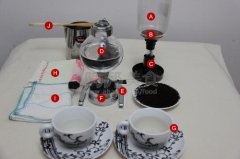
Siphon pot coffee basic utensils
Siphon pot, also known as Saifeng kettle, is a relatively stable way of coffee extraction, and the process is also very interesting. Using the siphon principle, coffee can complete the whole extraction process up and down in the pot. We can show off our skills by controlling water temperature, stirring, grinding, powder quantity, water volume, extraction time, mixing techniques, etc., without testing ourselves and our friends like hand pots.

The basic knowledge of Coffee Culture Coffee Story you don't know
Coffee won't melt when it's thrown into the water. The maximum extraction rate of roasted coffee beans is 30% (substances that can be dissolved in water divided by the total weight of coffee). 1. Whether it's French pressure, Philharmonic pressure, all kinds of pressure, or espresso. The range of the best extraction rate is 18% Mui 21%. Insufficient extraction (less than 18%) indicates that the flavor of coffee is not fully dissolved in water and is overextracted (more than 21%).
The practice of Fine Coffee basic knowledge latte
Latte features: 1, syrup, milk, milk foam, coffee unique combination; milk with its unique delicate and mild blend of espresso strong taste; 2, the cup tilted left and right, shaking, the middle coffee will also shake, as if dancing, mysterious hazy beauty. The use of latte utensils and materials the right amount of deep-roasted coffee beans (if made according to the standard of a mug

Basic knowledge of baristas: how to make good coffee and adjust the ratio of gouache to powder.
Whether a cup of hand-made coffee tastes good or not, its gouache ratio is very important, gouache ratio is not only the relationship between strong and light, what is the appropriate ratio of powder to water? 1:15 is believed to be the most common answer. The pink-water ratio at 1:15 seems to exist as if it were true. In many hand-brewing experiments in Qianjie, when the ratio of powder to water is 1:15, the concentration is mostly concentrated in 1.30-1.36%.

SCAE European Fine Coffee Association Barista Skills certification and assessment system
According to the latest update on the SCAE website, the Barista skills course in April was reset to three levels: Foundation (basic course), Intermediate (Intermediate level) and Professional (Professional level). Students who have previously taken the Level 1 will switch to the Professional course if they continue to study. The overall training and assessment content after the revision is more detailed than before.

Ears coffee brewing method-correct hand ground coffee brewing method
Ears coffee brewing method-correct hand grinding coffee brewing method Water temperature: boiling water poured into the cold hand washing pot is basically about 95 degrees, at this time to grind beans (I use electric mill, hand or first grind good or water into cold white open) As DIMLAU said, 95 degrees start steaming, when the pot of water 90 degrees can start flushing, basically the water temperature has been in the right
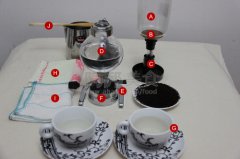
Siphon coffee pot coffee brewing basic equipment
Siphon pot, also known as the match wind pot, is a relatively stable way of coffee extraction, and the process is also very interesting, using the siphon principle, coffee in the pot up and down to complete the entire extraction process, we can control the water temperature, stirring, grinding, powder, water, extraction time, stirring techniques, etc. to show off their own technology, and not like a hand flush pot as a test of themselves and friends
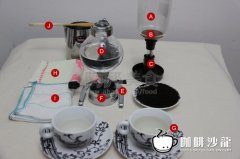
The basic utensils of siphon pot coffee brewing
Siphon pot, also known as Saifeng kettle, is a relatively stable way of coffee extraction, and the process is also very interesting. Using the siphon principle, coffee can complete the whole extraction process up and down in the pot. We can show off our skills by controlling water temperature, stirring, grinding, powder quantity, water volume, extraction time, mixing techniques, etc., without testing ourselves and our friends like hand pots.
The basic tool of hand-brewing coffee the extraction principle of triangular filter cup is better than the filter cup with several holes.
Pour over means to pour water and let the coffee particles tumble properly to release the coffee substance, that is, to make a cup of coffee. Hand brewing is one of the most widely used ways to brew coffee. It only needs simple utensils to start brewing coffee. And in the way, there are so-called hand drip (follicles) and pour over (cooking).

SCAE Gold Cup extraction Theory what is the scaa barista certification where to get the scae international barista certificate
Professional coffee knowledge exchange more coffee bean information please follow the coffee workshop (Wechat official account cafe_style) Let's start with scae's gold cup extraction theory according to scae (European Coffee Association) definition Gold Cup Standard (published in 1960) 1000ml water, 5065g coffee powder, 92C 96C hot water to brew coffee basically SCAE.

The reason why the basic knowledge of coffee affects the taste of coffee
A cup of coffee, from the curl of aroma, extends to a variety of sour, bitter and astringent flavors, and ends with a long aftertaste, the middle taste is very subtle, and there are many reasons for this subtle taste. From a large point of view: among the factors that determine the taste of a cup of coffee: raw bean quality accounts for 60%, roasting accounts for 30%, extraction accounts for 10%. Just as there is no good.